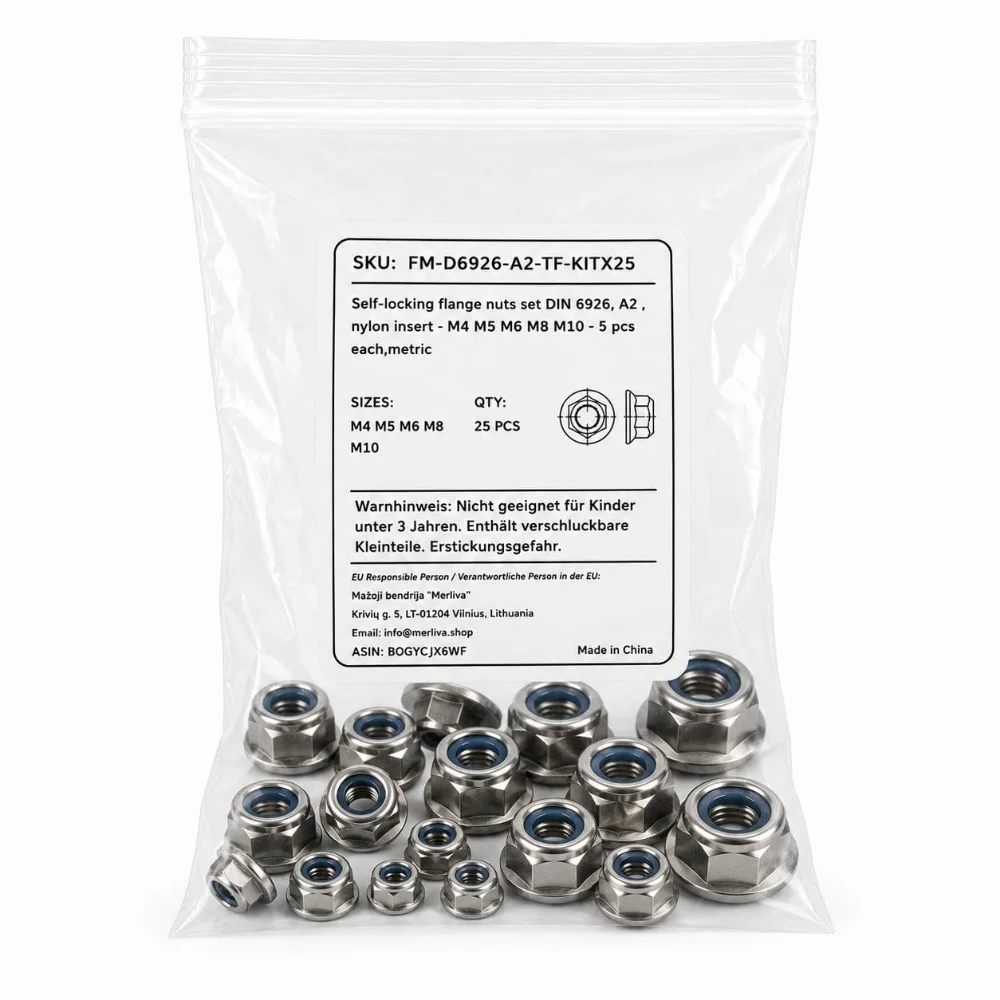
DIN 6926: choosing a self-locking flange nut
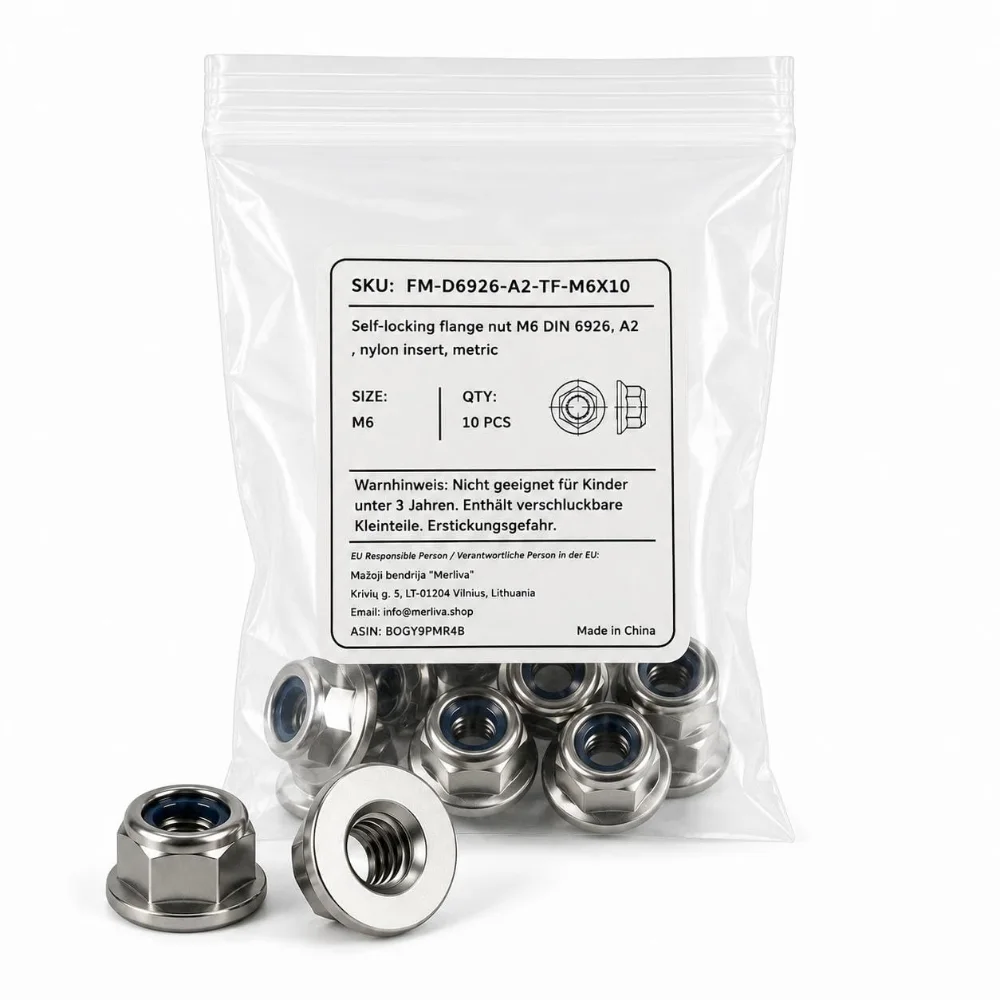
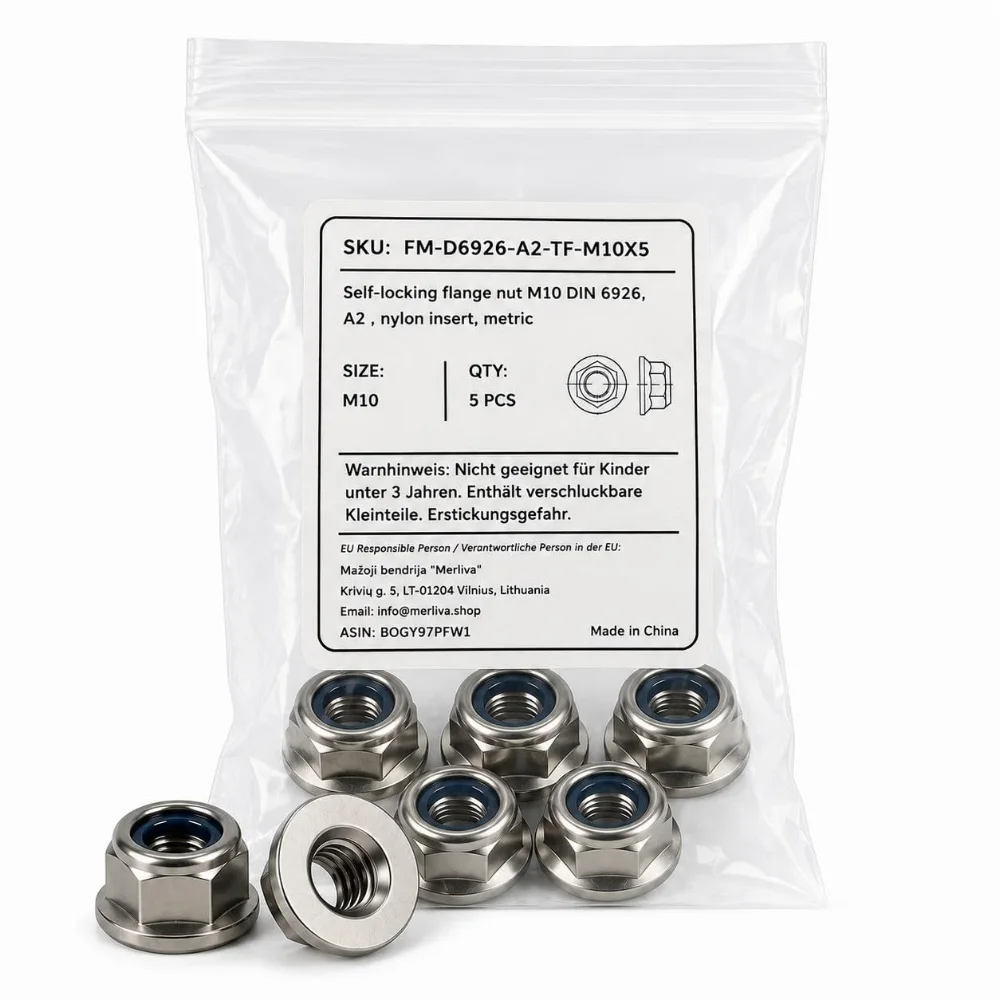
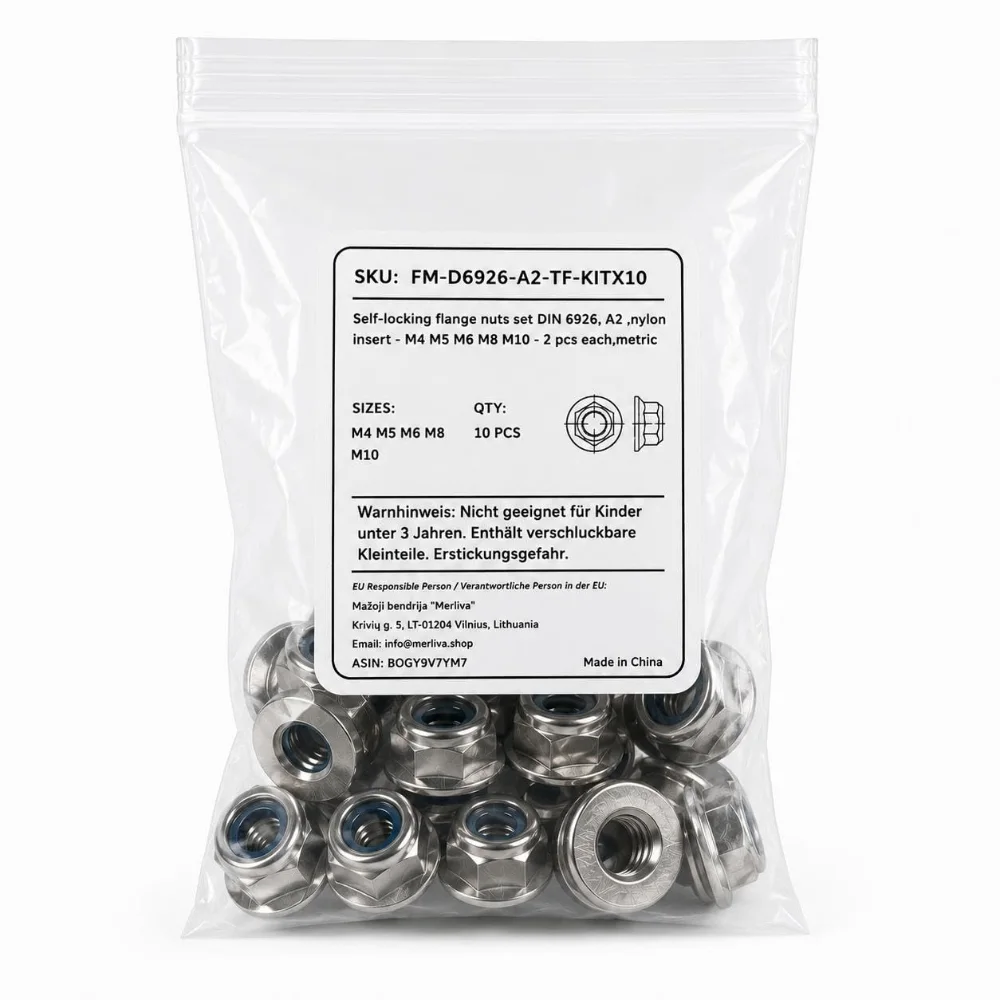
A DIN 6926 flange nut is a hex nut with an integral flange and a polyamide (nylon) locking insert. It resists loosening on its own and in many cases needs neither a washer nor a lock nut.
Design
Hex for tightening with a spanner or socket. Flange as a built-in washer that enlarges the bearing surface. Nylon insert at the top: the bolt thread forms the ring as it is screwed on, and the resulting friction keeps the nut in place.
DIN 6926 vs DIN 6923 vs DIN 985
| Standard | Flange | Locking | Typical use |
|---|---|---|---|
| DIN 6926 | yes, smooth | nylon insert | vibration, delicate surfaces |
| DIN 6923 | yes | none; often serrated | serrations bite into the surface |
| DIN 985 | no | nylon insert | with a separate washer |
Serrations on DIN 6923 nuts bite into the part and can damage painted or soft surfaces. The smooth flange of DIN 6926 protects the surface while the nylon insert does the locking.
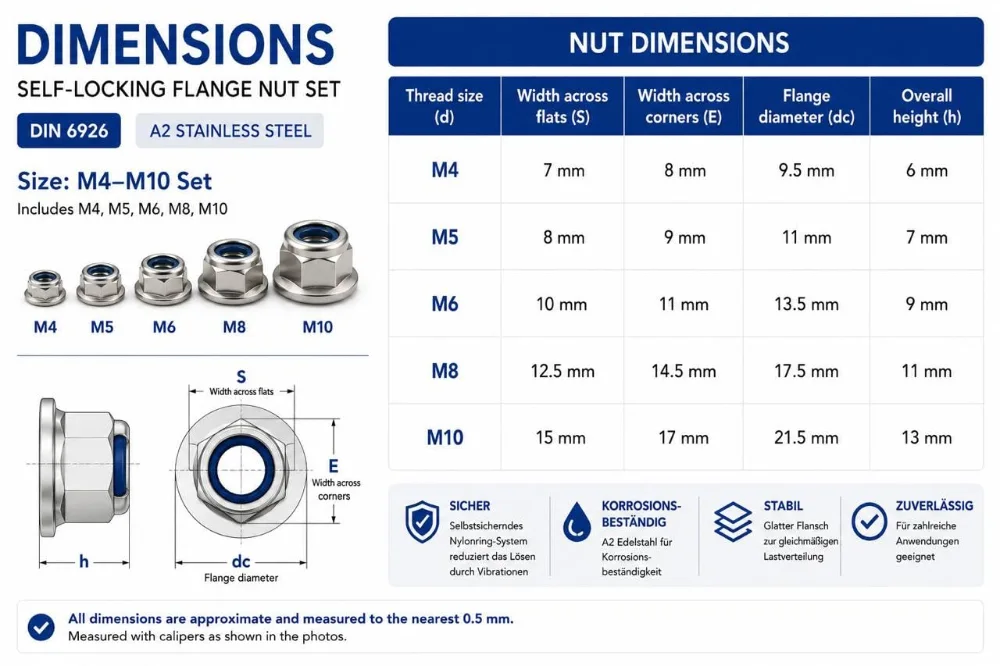
Dimensions M4 to M10
Measured values of our nuts (approx. ±0.5 mm):
| Thread | Width across flats S | Width across corners E | Flange diameter dc | Height h |
|---|---|---|---|---|
| M4 | 7 mm | 8 mm | 9.5 mm | 6 mm |
| M5 | 8 mm | 9 mm | 11 mm | 7 mm |
| M6 | 10 mm | 11 mm | 13.5 mm | 9 mm |
| M8 | 12.5 mm | 14.5 mm | 17.5 mm | 11 mm |
| M10 | 15 mm | 17 mm | 21.5 mm | 13 mm |
Finding the right size
The nut size matches the bolt thread: an M6 bolt needs an M6 nut. The nominal size is the outer thread diameter in millimetres. If unsure, measure the bolt with calipers or try an assortment.
A2 stainless steel
A2 (also V2A, similar to AISI 304) is an austenitic stainless steel that resists rust indoors and in sheltered outdoor locations. For constant exposure to salt or chlorine, such as by the sea or in pools, A4 is the better choice.
Installation tips
- At least two to three threads of the bolt should protrude beyond the nut so the insert engages fully.
- Nylon inserts are rated up to about 120 °C; use all-metal lock nuts for hotter spots.
- The insert loses holding power with repeated removal. Use a new nut for safety-relevant joints.
- For stainless on stainless, use a little lubricant to prevent galling.